
Supreme Court Refuses Urgent Hearing On Anti-Cow Slaughter Plea Ahead Of Bakrid
The recent decision of the Supreme Court of India regarding a plea connected to anti-cow slaughter laws ahead of Bakrid has once again sparked nationwide discussions on religion, law, constitutional rights, and governance. The matter gained public attention after the apex court declined to urgently hear a petition seeking strict enforcement of anti-cow slaughter laws before the festival of Eid-al-Adha, commonly known as Bakrid.
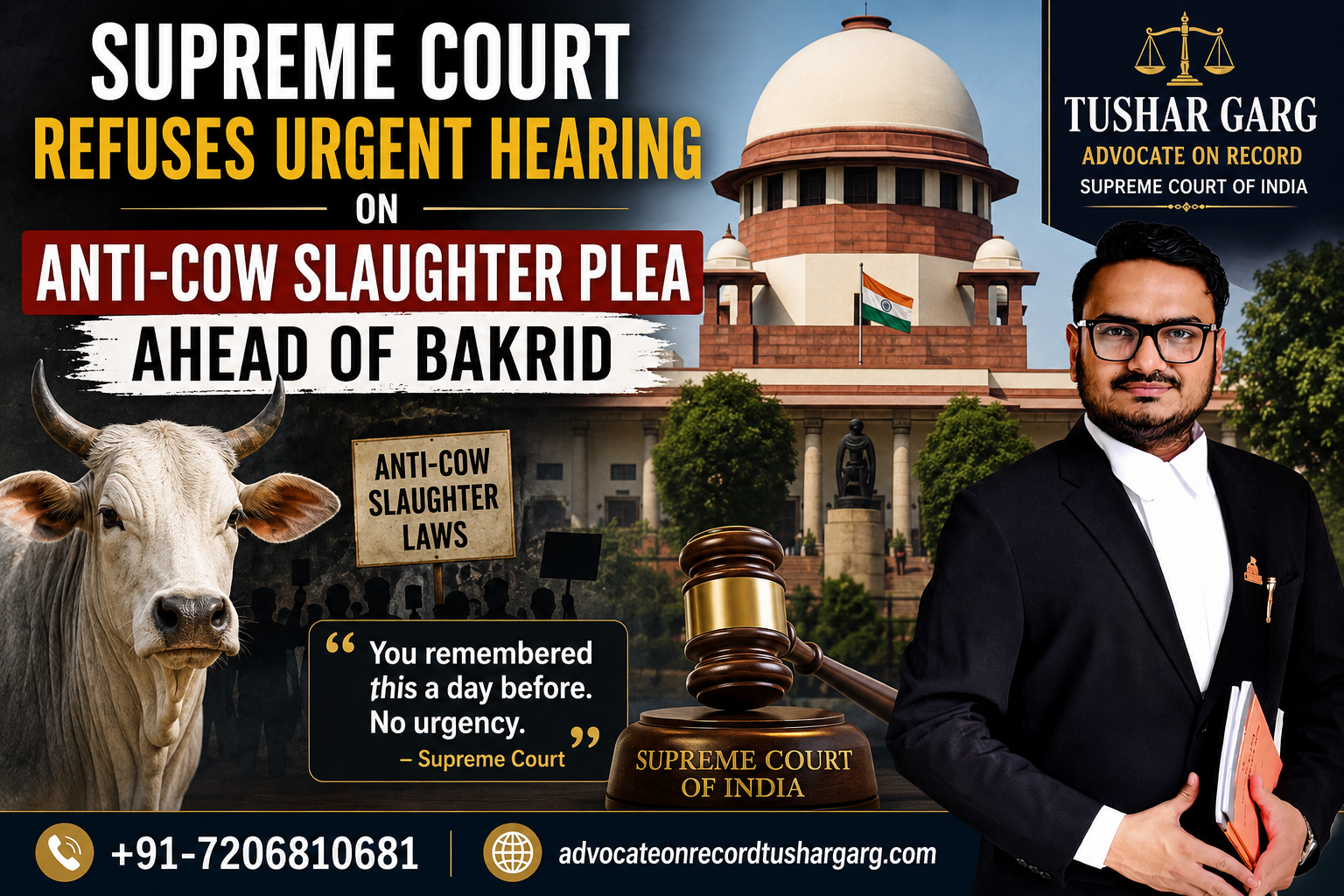
The plea was mentioned before a bench headed by Chief Justice Surya Kant along with Justice Joymalya Bagchi. Advocate Barun Kumar Sinha requested an urgent hearing, arguing that Bakrid was only a couple of days away and interim directions could help authorities ensure proper implementation of anti-cow slaughter laws across different states. However, the court refused to treat the matter as urgent. According to reports, the bench observed that the plea had been brought at the last moment and remarked, “You remembered this a day before. No urgency.”
The petition was reportedly filed by Satish Kumar Aggarwal, former vice-president of the Akhil Bharat Hindu Mahasabha. The petitioner sought directions for stricter implementation of existing laws related to cow slaughter and regulation of slaughterhouses during the Bakrid period.
India has always maintained a sensitive balance between religious freedom and legal restrictions. Cow slaughter laws in the country differ from state to state. Several states, including Uttar Pradesh, Gujarat, Haryana, and Rajasthan, have stringent laws prohibiting cow slaughter, while some northeastern states and Kerala have comparatively relaxed regulations. This legal diversity often becomes a topic of debate during religious festivals like Bakrid.
The Supreme Court’s refusal to grant an urgent hearing does not mean that the court dismissed the issue entirely. Instead, it simply declined to prioritize the matter immediately before the festival. Legal experts believe that the judiciary generally avoids last-minute interventions in matters involving religion and public sentiment unless there is a clear constitutional emergency or violation of law.
This development has generated mixed reactions across the country. Supporters of the petition argue that existing anti-cow slaughter laws should be implemented strictly without exception. They believe authorities must ensure that illegal slaughter activities are prevented during festivals. On the other hand, critics of the plea feel that such last-minute petitions can create unnecessary tension and communal sensitivity during important religious occasions.
Bakrid is one of the most significant festivals celebrated by Muslims worldwide. The festival symbolizes sacrifice, compassion, and devotion. In India, authorities usually issue guidelines every year to ensure that animal sacrifice follows local laws and municipal regulations. State governments and local administrations also monitor slaughterhouses and transportation of animals during the festival period.
The case also highlights how constitutional institutions like the judiciary often face difficult situations involving faith, public order, and individual rights. India’s Constitution guarantees freedom of religion under Article 25, but this freedom is subject to public order, morality, health, and other legal provisions. Similarly, Article 48 of the Directive Principles encourages the state to prohibit the slaughter of cows and calves. Because of this constitutional framework, cow protection remains both a legal and emotional issue in Indian society.
Many legal observers noted that courts usually expect petitions involving public importance to be filed well in advance. Filing such pleas just before a festival leaves limited time for judicial review and implementation. This may have influenced the court’s observation regarding urgency.
Interestingly, similar issues have also appeared before various High Courts in recent years. Courts have generally emphasized that authorities must ensure compliance with existing laws while also maintaining communal harmony. The judiciary has repeatedly stressed that law and order should not be disturbed in the name of religion or activism.
Social media reactions to the Supreme Court’s decision have been sharply divided. Some users praised the court for refusing to entertain what they called a “last-minute publicity plea,” while others felt the matter deserved urgent consideration because it involved legal enforcement. Such reactions show how emotionally charged issues related to religion and cow protection remain in India’s public discourse.
At the same time, legal experts have advised citizens not to misinterpret the court’s refusal as a judgment on the merits of anti-cow slaughter laws themselves. The decision only concerned the urgency of hearing the petition before Bakrid. The larger legal questions surrounding enforcement, regulation, and constitutional interpretation remain open for future judicial examination.
The role of the Supreme Court of India is especially important in maintaining constitutional balance during sensitive social and religious matters. The judiciary often acts cautiously in situations where immediate intervention could impact public harmony. Courts generally prefer administrative authorities and state governments to handle implementation of existing laws unless exceptional circumstances demand judicial action.
As India continues to evolve socially and politically, debates surrounding religious practices, constitutional rights, and animal protection are likely to continue. The recent Bakrid-related plea once again demonstrates how courts, governments, and citizens must carefully navigate issues where law and faith intersect.
In conclusion, the Supreme Court’s refusal to urgently hear the anti-cow slaughter plea ahead of Bakrid has become a major legal and social discussion across the country. While the court declined immediate listing, the issue has reignited conversations about constitutional values, religious freedom, state laws, and the role of the judiciary in sensitive matters. Moving forward, maintaining peace, respecting the law, and preserving communal harmony will remain essential responsibilities for both authorities and citizens.
Tushar Garg – Role & Function
Tushar Garg is presented as an Advocate-on-Record (AOR) at the Supreme Court of India. An Advocate-on-Record has a special and recognized role before the Supreme Court.
Tushar Garg is an Advocate-on-Record at the Supreme Court of India, known for handling constitutional, civil, criminal, and public interest matters. His role includes filing petitions, drafting legal documents, representing clients before the apex court, and ensuring compliance with Supreme Court procedures. In matters related to national importance, legal rights, and constitutional issues, he actively contributes through legal research and courtroom advocacy. With a strong commitment to justice and professional excellence, Tushar Garg focuses on delivering effective legal solutions while upholding the values of the Indian Constitution and the dignity of the judicial system.
“Committed to Justice. Driven by Excellence.”