

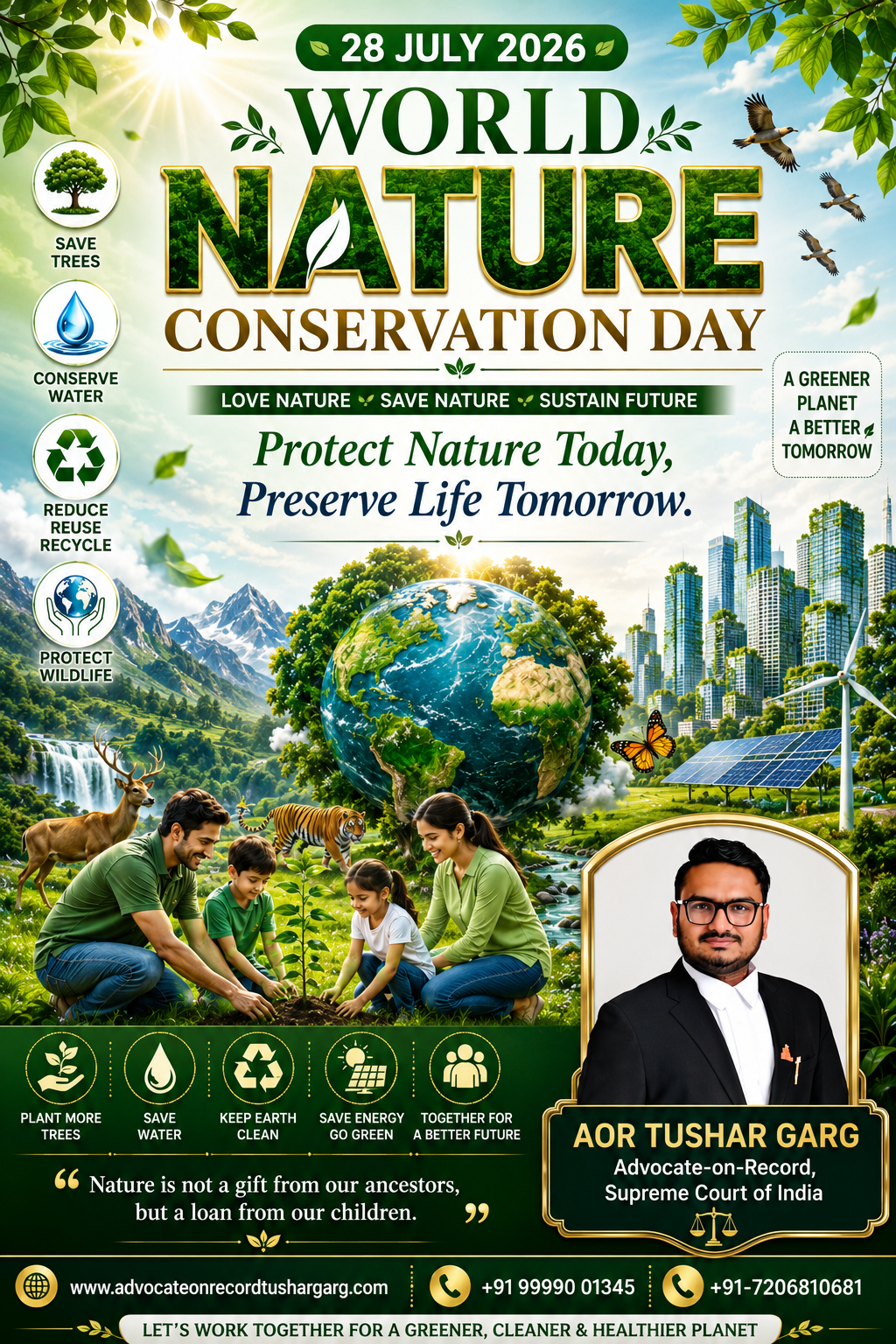
World Nature Conservation Day 2026: Protecting Nature Today for a Greener Tomorrow
By AOR Tushar Garg | Advocate-on-Record, Supreme Court of India
Date: 28 July 2026
Every year on 28th July, the world observes World Nature Conservation Day, a reminder that the future of humanity depends on the health of our natural environment. This important day encourages individuals, communities, governments, and organizations to work together to preserve forests, wildlife, water resources, and biodiversity for future generations.
Nature provides us with everything we need to survive—clean air, fresh water, fertile soil, food, medicine, and a stable climate. Yet, rapid urbanization, pollution, climate change, deforestation, and overconsumption continue to threaten these invaluable resources. World Nature Conservation Day serves as a global call to action, inspiring people to adopt sustainable lifestyles and take meaningful steps toward protecting our planet.
Why Nature Conservation Matters
Nature is not merely a resource; it is the foundation of life itself. Healthy ecosystems regulate the climate, maintain water cycles, support agriculture, and provide habitats for millions of species. When forests disappear, rivers become polluted, and wildlife populations decline, the consequences affect every aspect of human life.
Climate change has intensified natural disasters, rising temperatures, droughts, floods, and unpredictable weather patterns across the globe. These challenges highlight the urgent need for stronger conservation efforts. Protecting nature is no longer an option—it is a necessity for ensuring a sustainable future.
The Importance of Forests
Forests cover nearly one-third of the Earth’s land area and play a crucial role in maintaining ecological balance. They absorb carbon dioxide, release oxygen, regulate rainfall, and provide homes for countless plants and animals.
However, illegal logging, agricultural expansion, and urban development continue to destroy forests at an alarming rate. Every tree planted today contributes to cleaner air, healthier ecosystems, and a better future for generations to come.
Water Conservation is Equally Important
Water is one of the most precious natural resources. Despite covering over 70% of the Earth’s surface, only a small percentage is suitable for human consumption.
Simple habits can significantly reduce water wastage:
Turn off taps when not in use.
Repair leaking pipes promptly.
Harvest rainwater wherever possible.
Use water-efficient appliances.
Avoid polluting rivers and lakes.
Every drop saved today helps secure tomorrow’s water needs.
Protecting Wildlife and Biodiversity
The Earth is home to millions of species, each playing a unique role in maintaining ecological balance. Unfortunately, habitat destruction, pollution, poaching, and climate change have placed many species at risk of extinction.
Wildlife conservation is essential because biodiversity strengthens ecosystems and supports food security, medicine, and scientific research. Protecting endangered species means preserving the delicate balance of nature itself.
Small Actions Can Create Big Changes
Nature conservation begins with individual responsibility. Every citizen has the power to contribute through small yet impactful actions.
Some practical ways include:
Plant more trees.
Reduce plastic consumption.
Recycle household waste.
Use public transport or bicycles whenever possible.
Save electricity and energy.
Support eco-friendly products.
Participate in local cleanliness drives.
Educate children about environmental responsibility.
When millions of people adopt sustainable habits, the collective impact becomes extraordinary.
India’s Role in Environmental Protection
India has made significant progress in promoting renewable energy, wildlife conservation, afforestation programs, and sustainable development initiatives. Campaigns such as Mission LiFE (Lifestyle for Environment) encourage citizens to make environmentally responsible choices in daily life.
From protecting tiger reserves to expanding solar energy projects, India continues to demonstrate its commitment toward balancing economic development with environmental sustainability.
The Legal Perspective
Environmental protection is not only a moral responsibility but also a constitutional obligation. Article 48A of the Constitution of India directs the State to protect and improve the environment, while Article 51A(g) places a fundamental duty upon every citizen to safeguard forests, lakes, rivers, wildlife, and the natural environment.
The Supreme Court of India has consistently emphasized that the Right to Life under Article 21 includes the right to live in a clean and healthy environment. Through various landmark judgments, the judiciary has reinforced sustainable development, pollution control, and ecological preservation as essential components of constitutional governance.
As legal professionals, policymakers, and responsible citizens, we all share the responsibility of ensuring that environmental laws are respected and effectively implemented.
A Message from AOR Tushar Garg
On this World Nature Conservation Day 2026, let us remember that protecting nature is one of the greatest investments we can make for future generations. Every tree planted, every river cleaned, every piece of plastic recycled, and every conscious decision to live sustainably contributes to a healthier and greener planet.
Environmental conservation is not the responsibility of governments alone—it is a shared duty of every individual. Together, we can create a future where development and nature exist in harmony.
Conclusion
World Nature Conservation Day reminds us that the Earth’s resources are limited, but our commitment to protecting them can be limitless. The choices we make today will determine the world our children inherit tomorrow.
Let us pledge to reduce pollution, conserve water, protect forests, preserve wildlife, and promote sustainable living every single day—not just on 28 July.
“Protect Nature Today, Preserve Life Tomorrow.”
Author
AOR Tushar Garg
Advocate-on-Record, Supreme Court of India
Dedicated to promoting legal awareness, constitutional values, environmental responsibility, and sustainable development through law and public service.