Mamata Banerjee in Supreme Court LIVE: Bengal CM Fights Own Case Against SIR, Says ‘Justice Is Crying Behind Doors’
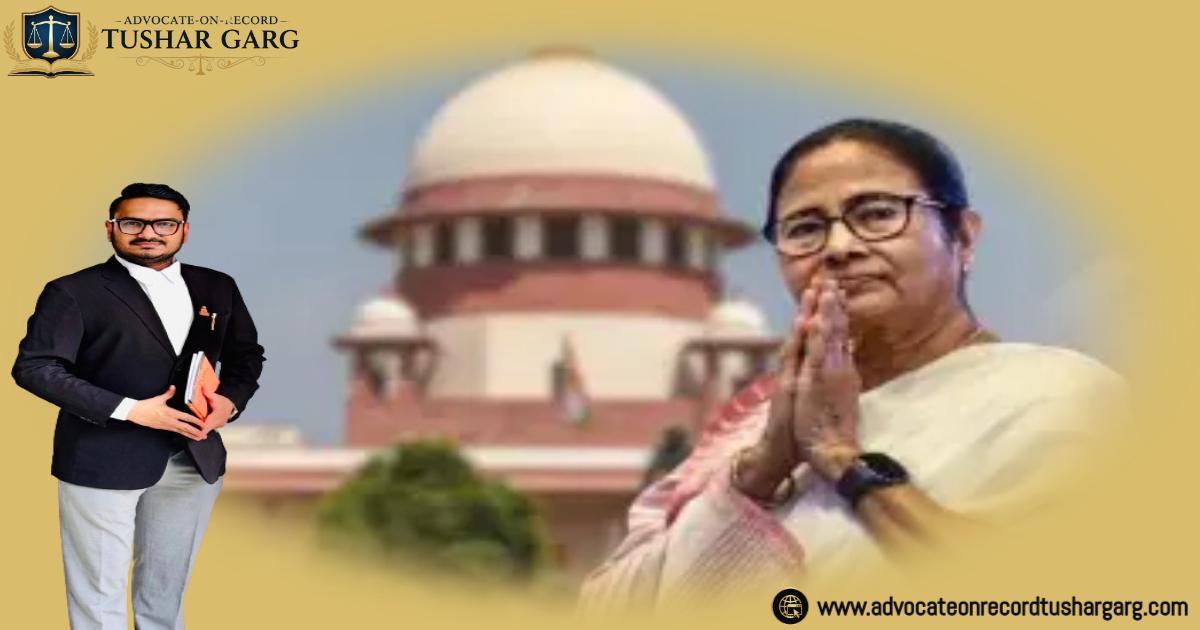
New Delhi | Live Updates — The Supreme Court of India witnessed an unusual and emotionally charged moment today as West Bengal Chief Minister Mamata Banerjee appeared in person to challenge the Special Intensive Revision (SIR) of electoral rolls in the state. What made the hearing historic was not just her presence, but her determination to fight her own case, stepping beyond political speeches into the courtroom battle itself.
As the proceedings began, Mamata Banerjee addressed the court with visible urgency, making a striking remark that quickly echoed across newsrooms:
“Justice is crying behind closed doors.”
The statement summed up her stand — that the democratic rights of ordinary voters are under threat.
Why the SIR Row Matters
The Special Intensive Revision (SIR) is an exercise initiated by the Election Commission of India (ECI) to update voter lists by removing duplicates, correcting errors, and verifying identities. While the ECI maintains that the process is routine and necessary, the West Bengal government strongly disagrees.
According to Mamata Banerjee, the SIR exercise in Bengal has been conducted in a hurried, opaque, and selective manner, raising fears that large numbers of genuine voters could be excluded ahead of the next Assembly elections. She claims that the process has caused anxiety among citizens, especially the poor, elderly, migrants, and first-time voters.
A Rare Move: CM Argues Her Own Case
In a move rarely seen in Indian legal history, Mamata Banerjee requested permission from the Supreme Court to argue her own petition. A law graduate by training, the Chief Minister told the bench that this case was not merely legal for her — it was deeply personal and democratic.
Legal experts present in the courtroom noted that if the court allows her to argue personally, it would mark a historic first for a sitting Chief Minister. Even if senior advocates continue to represent her, her direct participation has already added a powerful dimension to the case.
The matter is being heard by a three-judge bench led by Chief Justice Surya Kant, along with Justices Joymalya Bagchi and Vipul Pancholi. Several related petitions filed by opposition MPs and civil society groups are also being heard together.
‘Justice Is Crying Behind Doors’ — What She Meant
During the hearing, Mamata Banerjee argued that democracy cannot survive if voters are made to run from office to office to prove their identity. She questioned why citizens were being issued notices for minor discrepancies — such as spelling differences or clerical mismatches — instead of correcting them automatically using existing government databases.
Her emotional appeal reflected a larger concern:
that administrative power should not silence people’s right to vote.
According to her petition, over one crore voters in West Bengal have been affected by SIR-related notices. Many of them, she said, do not have the means or knowledge to navigate complex verification procedures.
Key Demands Before the Supreme Court
Mamata Banerjee has urged the Supreme Court to:
Set aside all SIR-related orders issued by the Election Commission in 2025
Ensure that the 2025 electoral rolls are used for upcoming elections
Direct the ECI to follow transparent, voter-friendly procedures
Prevent arbitrary deletion or suspension of voter names
Her argument is clear — electoral reforms should strengthen democracy, not weaken public trust.
Political Tension in the Background
Outside the courtroom, the political atmosphere remains tense. Trinamool Congress leaders have backed Mamata Banerjee, calling the SIR exercise an attempt to “manipulate democracy through bureaucracy.” Opposition parties have echoed similar concerns, warning against the misuse of electoral machinery.
On the other hand, the BJP has defended the Election Commission, accusing the Bengal government of creating unnecessary panic and shielding illegal voters. The political divide has only sharpened public attention on the case.
Security around the Supreme Court was visibly heightened today, and media presence was intense as live updates poured in throughout the hearing.
What Happens Next
The Supreme Court is expected to continue hearing arguments from all sides before deciding on interim relief or issuing directions. Whether Mamata Banerjee will be allowed to personally argue her case remains a key question.
Legal observers believe the court’s decision could have far-reaching consequences, not only for West Bengal but for how voter list revisions are carried out across India in the future.
For now, all eyes remain on the Supreme Court — where law, politics, and democracy have converged in a rare and dramatic courtroom moment.
As Mamata Banerjee fights her case, one thing is certain:
this legal battle has moved far beyond procedure — it has become a symbolic fight for voter rights and democratic faith.
Supreme Court of India | AOR Tushar Garg – Judiciary-Centric Opinion
-
The judiciary’s primary duty is not to judge political intent, but to ensure constitutional processes remain just, fair, and reasonable.
-
Electoral roll revision is within the Election Commission’s authority, yet judicial scrutiny becomes essential when procedural fairness is questioned.
-
The Supreme Court must assess whether the SIR exercise balances administrative efficiency with voter protection.
-
Any mechanism that risks exclusion of genuine voters warrants heightened judicial caution, especially in proximity to elections.
-
Courts intervene not to manage elections, but to safeguard democratic participation, which is a basic feature of the Constitution.
-
The presence of a Chief Minister before the Court reinforces that institutional accountability applies equally to all constitutional authorities.
-
Ultimately, the judiciary’s role is to preserve public confidence in democracy, not to arbitrate political rivalry.
#SupremeCourt #MamataBanerjee #aor #aortushargarg #advocate #SIR